Clothes that smell after a wash are usually pointing to one of four problems: odor was not fully removed from the fabric, the load could not move or rinse properly, damp laundry sat too long, or residue and moisture inside the washer transferred an odor back to the load. The useful first step is not adding fragrance. It is identifying when the smell appears and where it is strongest.
Start with the timing
Smell one item as soon as the cycle ends, before drying it. Then check the empty drum, detergent dispenser, door seal on a front-loader, and any accessible filter area described in the appliance manual.
- If only workout wear, towels, socks, or underarm areas smell, the problem is probably concentrated soil or odor in those fabrics.
- If most of the load smells musty and the washer smells normal, the load may have sat wet, been packed too tightly, or failed to spin or dry well.
- If clean items pick up the same smell and the empty washer also smells, investigate the machine and its maintenance needs.
- If the odor resembles sewage, burning, gas, or an electrical fault, stop troubleshooting laundry. Do not run the appliance until the source has been safely assessed.
This distinction prevents repeated cycles that never address the source.
Cause 1: The load was too full
Laundry needs enough room to move through wash and rinse water. A tightly packed drum can leave detergent and soil unevenly distributed, especially in bulky towels or bedding.
For the next load, follow the washer manual’s loading guidance rather than estimating by garment count. Separate a bulky item if it prevents the rest of the load from moving freely. Choose the cycle intended for the fabric and soil level. If a smaller, correctly loaded test load comes out clean-smelling, capacity or cycle choice was likely part of the problem.
Cause 2: The detergent dose was wrong
Too little detergent may not remove enough body oil and soil. Too much can create residue in clothing or the machine, particularly when the dose does not match load size, soil level, water conditions, or a high-efficiency washer.
Use the detergent label and appliance manual together. Confirm that an HE machine receives an HE-compatible detergent. Measure rather than pouring by eye, and do not assume that more product means more cleaning. If you recently changed detergent concentration, washer type, or load size, reset the dose before adding boosters.
Fabric softener can also leave a coating when it is overused or unsuitable for the item. Check the garment and product directions, especially for performance fabrics and absorbent towels.
Cause 3: Odor remained in the fabric
Sweat, body oils, food, and other soils may remain in a heavily used area even when the rest of a garment looks clean. Synthetic athletic fabrics can be particularly persistent.
Check the care label first. Turn an odor-prone garment inside out so the wash reaches the area that touched the body. Pretreat with a laundry product labeled for the fabric and type of soil, following its contact time and rinsing directions. Wash promptly rather than leaving sweaty items compressed in a gym bag or hamper.
If an item still smells when it leaves the washer, do not put it into a hot dryer. Recheck the care label, pretreat, and rewash. Drying can make a remaining odor harder to address, and fragrance can conceal rather than remove the underlying soil.
Cause 4: Wet clothes waited too long
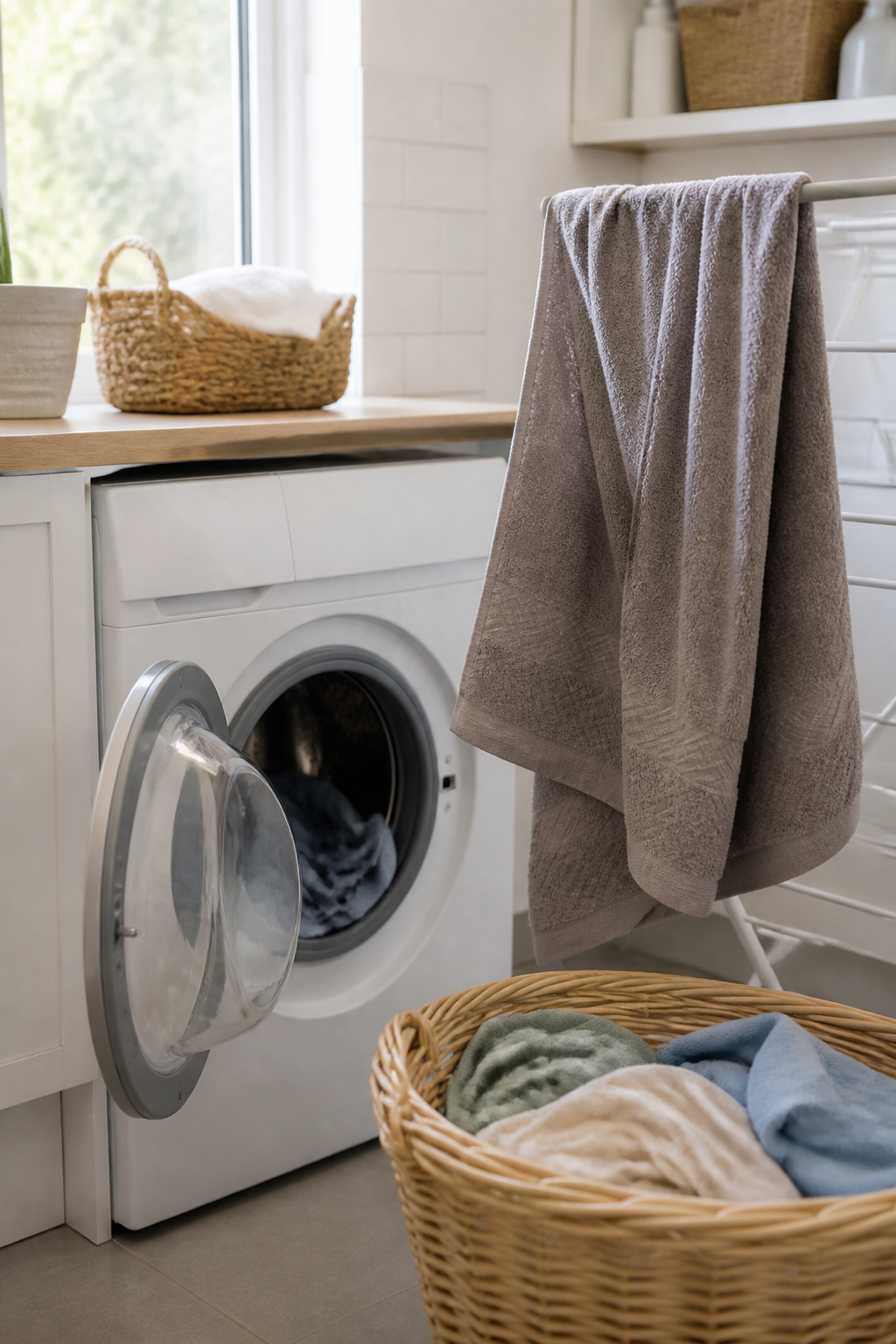
A clean load can become musty while sitting damp in a closed washer. Transfer it promptly and dry it completely using a method allowed by the care label. If the load already smells musty, rewash it instead of trying to cover the odor in the dryer.
Also check whether heavy items are truly dry before folding. Waistbands, pockets, seams, towels, and layered bedding can remain damp after lighter sections feel dry. Give bulky pieces more space or additional label-safe drying time, then let them cool before putting them in a closed drawer or cupboard.
Cause 5: The washer needs attention
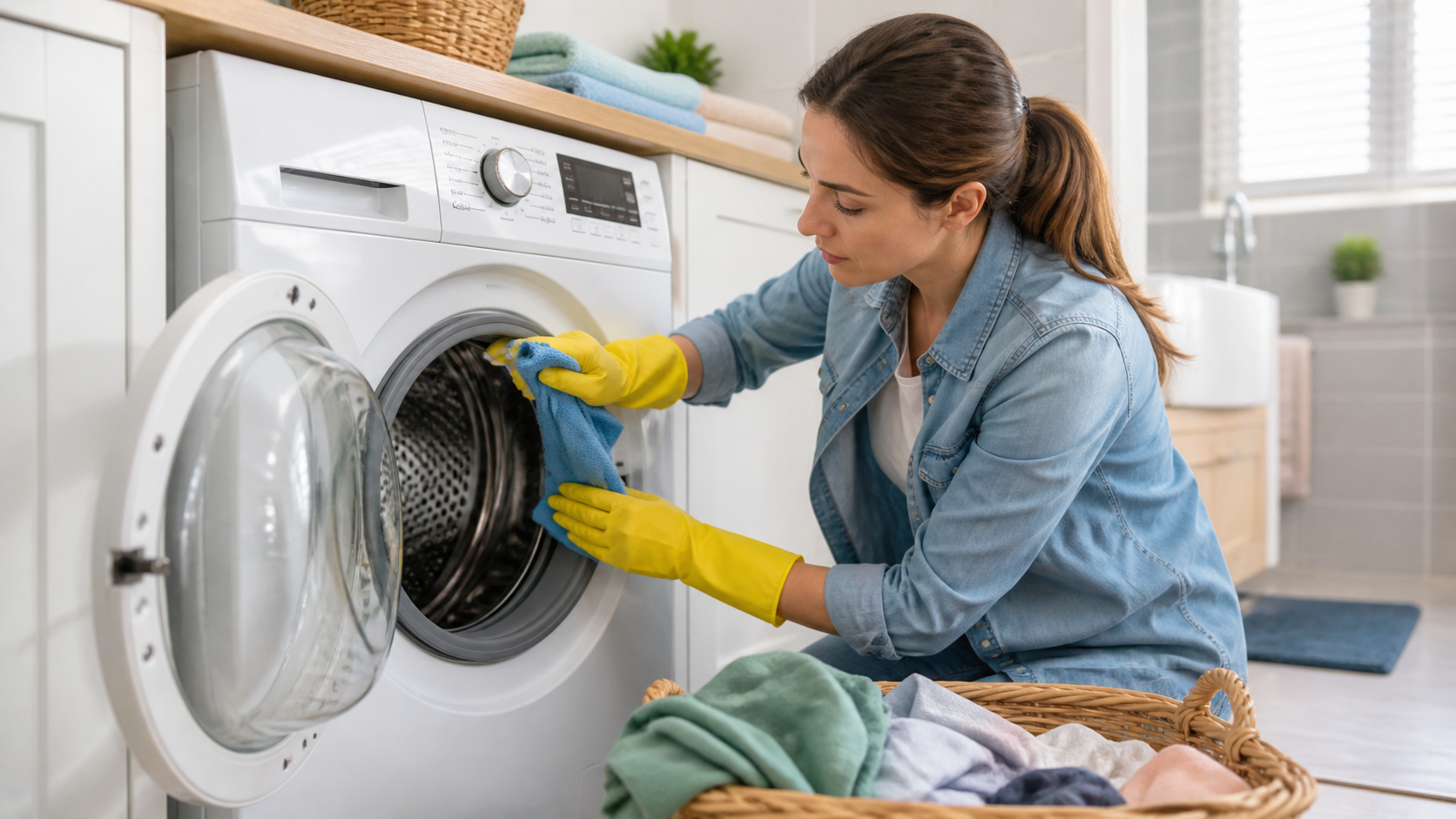
If the drum itself smells, follow the cleaning procedure for the exact model. Common inspection points include the dispenser, drum, lid or door area, and a front-loader’s gasket. Some machines have a cleaning cycle or an owner-serviceable filter; others do not. The manual—not a generic online recipe—should determine the product, dose, cycle, and parts you may remove.
Never combine washer cleaners, chlorine bleach, ammonia, vinegar, or other cleaning products. Do not improvise a chemical treatment when the manual specifies a different method. After the prescribed cleaning cycle, wipe accessible moisture and allow the machine to air out if the manufacturer permits it.
A persistent odor after correct cleaning may signal trapped debris, poor drainage, a blocked component, or an installation problem. If water remains in the drum, the machine does not drain or spin normally, or an inaccessible area smells, arrange service rather than dismantling the appliance.
A controlled one-load test
Use one ordinary, washable load to isolate the cause:
- Confirm the care labels, washer cycle, detergent type, and measured dose.
- Load loosely within the machine’s instructions.
- Pretreat only visibly soiled or odor-prone areas with a compatible laundry product.
- Remove the load as soon as the cycle ends.
- Smell it before drying and inspect whether it is unusually wet.
- Dry every item fully, then check again before storage.
If this load is fine, restore those variables one at a time. If it still smells and the empty washer does too, focus on machine care or service. If only one garment type fails, focus on its care label, soil, and compatible pretreatment.
When the odor is not a routine laundry problem
Stop using the machine if you notice a burning or electrical odor, smoke, sparking, leaking near electrical components, or a suspected gas odor. A sewage-like smell, recurring dirty water, or drainage backup also needs plumbing or appliance diagnosis rather than extra detergent.
Discarding a washable item is rarely the first step, but textiles affected by sewage, fuel, unknown chemicals, or extensive mold require hazard-specific guidance. Keep them separate from ordinary laundry until you know whether home washing is appropriate.
Keep the problem from returning
- Let sweaty or wet textiles dry before they sit in a hamper when practical.
- Wash loads you can remove and dry promptly.
- Match detergent type and dose to its label and the washer manual.
- Avoid packing the drum beyond the manufacturer’s loading guidance.
- Leave the washer in its recommended between-load condition and run its maintenance cycle on the schedule in the manual.
- Store only fully dry laundry in a dry space.
The shortest route to fresh laundry is a diagnosis: fabric, load, timing, washer, or drying. Once you identify which part of that chain failed, the correction is usually much simpler than adding another product.
Sources
- American Cleaning Institute: Laundry Basics
- Whirlpool: How to Remove Tough, Stinky Odors From Clothes
- Whirlpool: Why Does My Washing Machine Smell Like Mildew?