Never mix household cleaning products unless a product label explicitly directs you to do so. The most important rule is to keep bleach away from every other cleaner or disinfectant. Dangerous vapors and reactions can occur even when each product is safe on its own, and brand names do not reliably tell you every active ingredient.
Bleach and ammonia
Do not combine chlorine bleach with ammonia or an ammonia-containing cleaner. Poison Control warns that this can release highly irritating chloramine gas. Ammonia may appear in some glass, multipurpose, and degreasing products, so read the ingredient and warning information rather than judging by the product’s purpose.
Bleach and acids, including vinegar
Do not mix bleach with vinegar, acidic toilet-bowl cleaners, rust removers, lime removers, or other acidic products. Poison Control explains that an acid toilet cleaner combined with bleach can form irritating chlorine fumes and cause serious breathing problems.
“Natural” does not mean chemically neutral. Vinegar is an acid, and its familiar household use does not make it safe to combine with bleach.
Bleach and any other cleaner or disinfectant
CDC’s rule is broader than a short list: never mix household bleach—or any disinfectant—with other cleaners or disinfectants. That includes combining products in a bucket, adding one product to residue left by another, or pouring multiple drain or toilet products into the same fixture.
Use one correctly labeled product for the task. More ingredients do not create a stronger or more reliable clean.
Different drain cleaners and other strong products
Do not combine drain cleaners with each other or add another chemical after one fails. Products can contain strong acids, alkalis, oxidizers, or other reactive ingredients. The same one-product rule should be applied to oven cleaners, toilet-bowl cleaners, rust removers, and concentrated disinfectants.
If a product does not work, stop. Follow its label for rinsing, waiting, disposal, and next steps, or contact the manufacturer or an appropriate professional. Do not improvise a neutralizing mixture.
Safe switching between products
Ideally, finish one product according to its label before considering another. Do not assume a quick wipe has removed all residue. If the label permits rinsing, rinse thoroughly and allow the surface and area to ventilate and dry before using a different product. When instructions are unclear, contact the manufacturer instead of guessing.
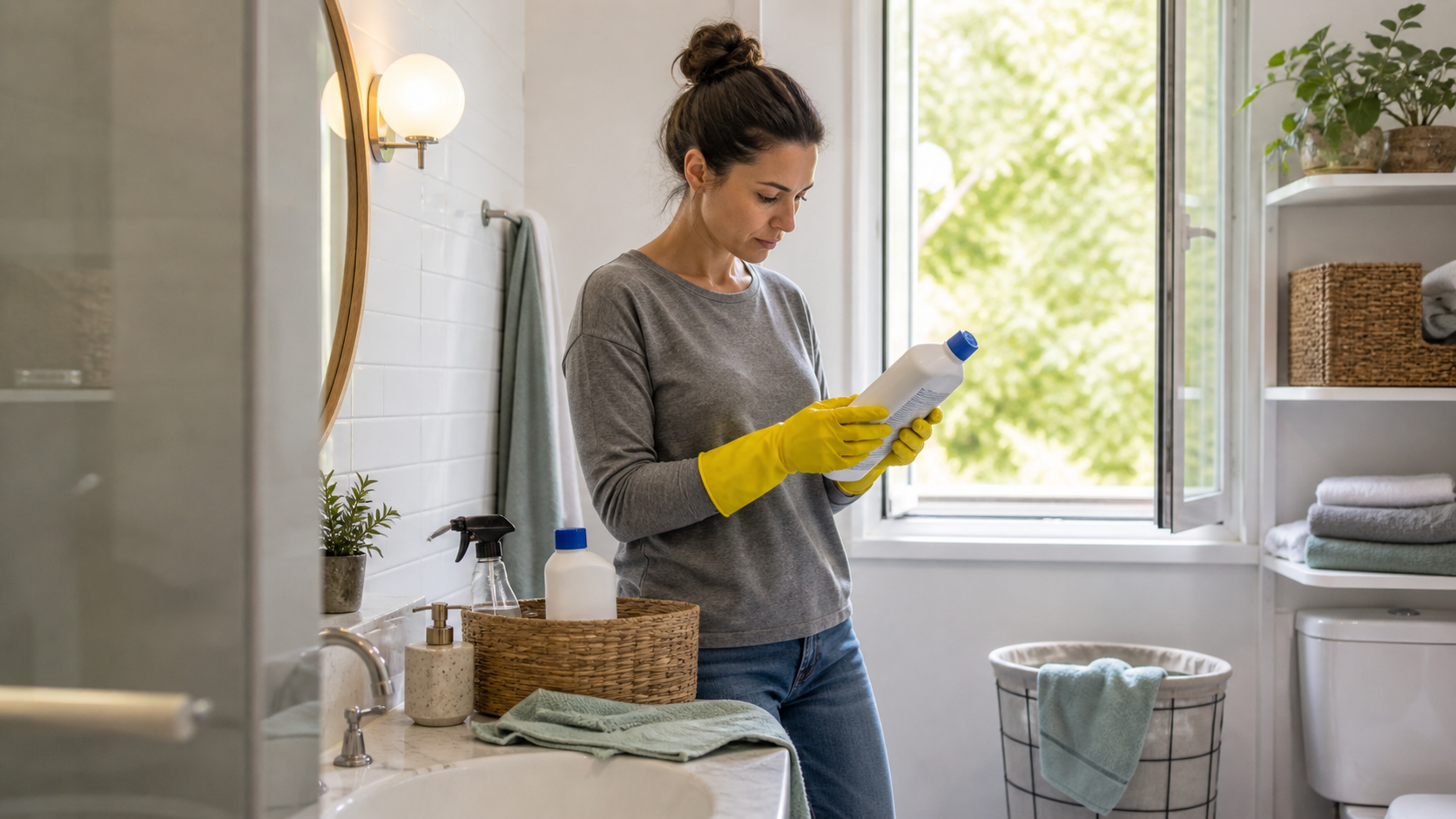
Keep every cleaner in its original labeled container. Never store a solution in a drink bottle or an unlabeled spray bottle. Use ventilation and any gloves or eye protection named on the label, and keep children and pets away during use and storage.
What to do after an accidental mixture
Stop using the products and leave the immediate area for fresh air without lingering to investigate. Do not lean over the container, try to smell the mixture, or add another chemical. If it can be done without exposure, keep other people and pets away.
Call emergency services immediately for severe breathing difficulty, collapse, a seizure, or inability to wake the person. In the United States, contact Poison Control at 1-800-222-1222 or webPOISONCONTROL for situation-specific guidance; elsewhere, use the local poison center or emergency service. Have the product containers or labels available, but do not re-enter an unsafe area to retrieve them.
For skin or eye exposure, follow the product label and poison-center instructions. Do not delay expert advice while searching for a home antidote.
The rule worth remembering
One task, one product, used exactly as labeled. If you do not know what is already on the surface or in the drain, pause and find out before adding anything else.
Sources