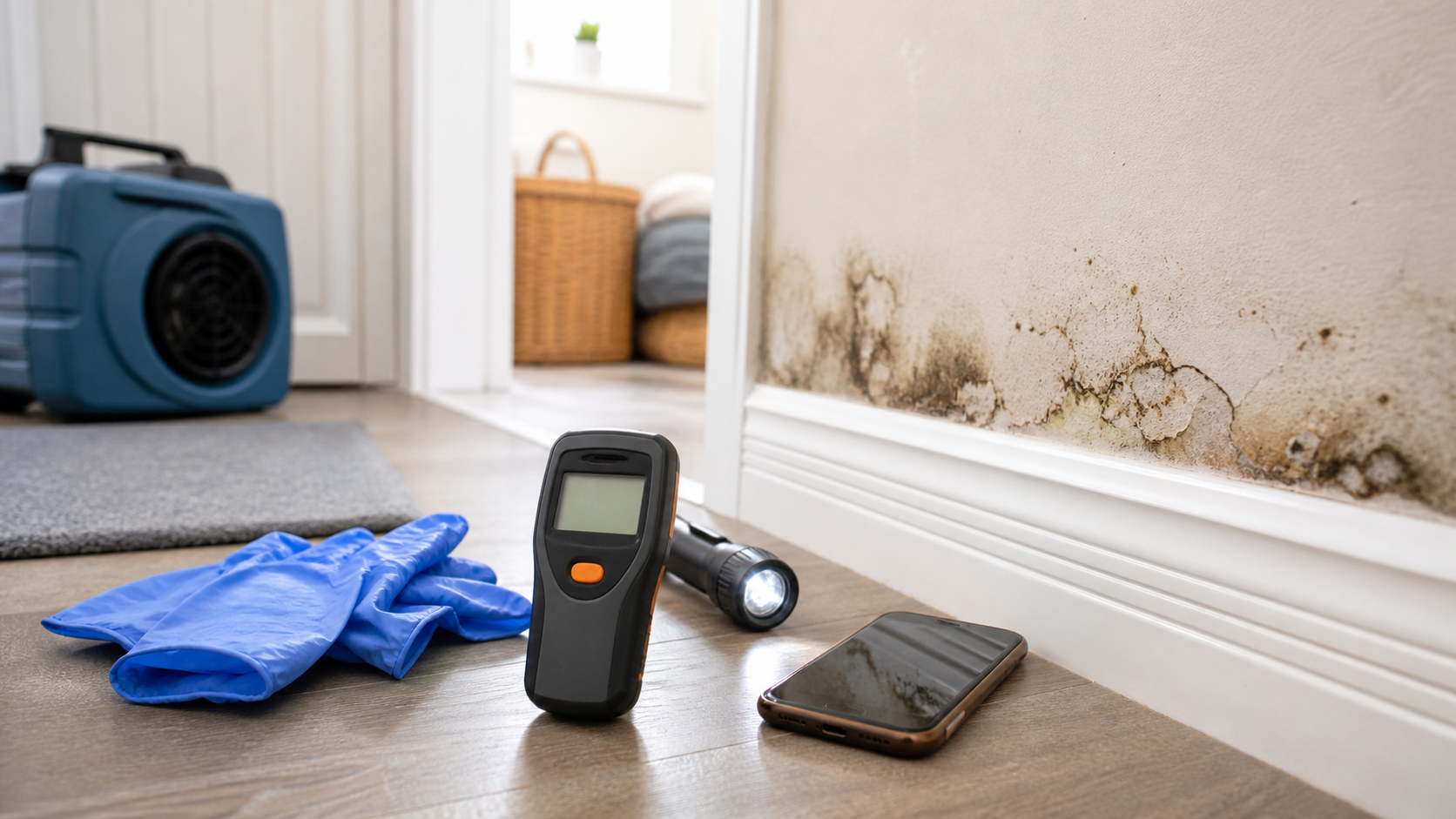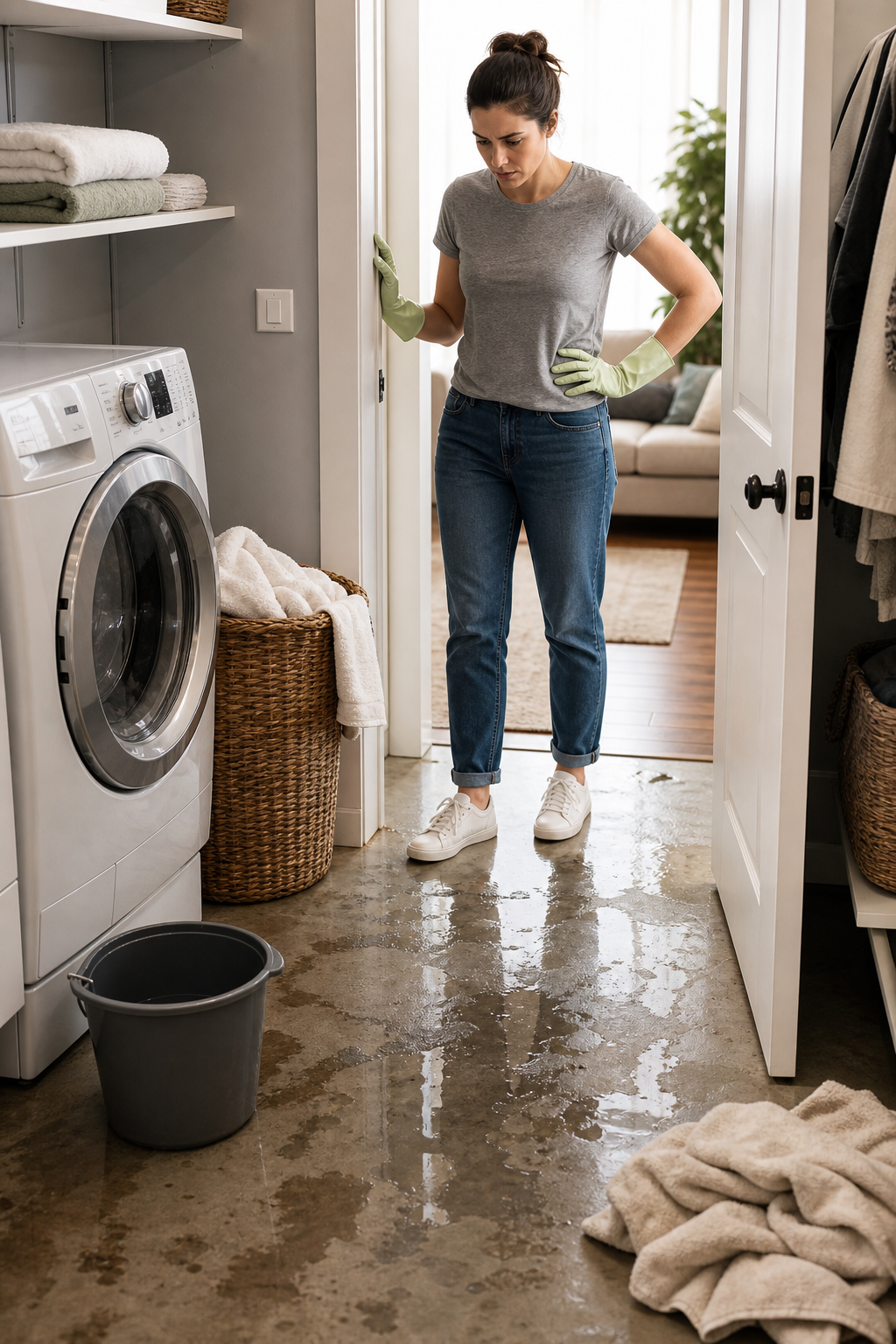
Mold, sewage, and major water damage should be treated as exposure and building-damage problems before they are treated as ordinary cleaning jobs. Keep people and pets away, shut off the water or electricity only if you can do so safely, document the damage, and identify whether the water is contaminated. Do not enter an area with electrical, structural, gas, or fast-moving-water hazards.
First, identify the kind of event
A small patch of surface mold caused by a corrected leak is different from a flooded room, hidden growth inside walls, or sewage entering a home. EPA guidance says that an area smaller than about 10 square feet—roughly a 3-by-3-foot patch—can often be handled by the occupant. That is a cleanup guideline, not a guarantee: the water source, affected materials, health of the people involved, and HVAC involvement can all make a smaller job unsuitable for DIY work.
Water from sewage, floodwater, or another contaminated source requires professional help experienced in contaminated-water restoration. If water may have reached outlets, appliances, the electrical panel, a ceiling, or structural materials, keep your distance and contact the appropriate utility, emergency service, building professional, insurer, or property manager.
What to do before cleanup begins
- Keep children, pets, and people with respiratory or immune-system vulnerabilities out of the area.
- Stop the moisture source only when it is safe and within your responsibility.
- Photograph affected rooms and belongings before moving them, if doing so does not increase exposure.
- Contact the property owner or insurer promptly when coverage, tenancy, or building responsibility may apply.
- Avoid running fans or an HVAC system when sewage is present or when the system itself may be contaminated. EPA warns that a mold-contaminated HVAC system can spread mold through the building.
If you smell gas, see sparking, hear structural movement, or encounter standing water near electricity, leave the area and use local emergency channels. Cleanup advice does not replace emergency response.
When a small mold cleanup may be reasonable
DIY cleanup may be reasonable when the moisture source has been fixed, the visible area is limited, the material can be cleaned safely, and no high-risk person will do or occupy the cleanup. EPA recommends scrubbing mold from hard surfaces with detergent and water and drying them completely. Porous materials such as ceiling tile or carpet may be difficult or impossible to clean fully once moldy.
CDC advises mold-cleanup workers to protect their breathing, skin, and eyes, including at least a NIOSH-approved N95 respirator, protective gloves, and goggles that keep out dust and particles. People with allergies, immune suppression, underlying lung disease, asthma, or COPD should not take part in mold cleanup; CDC advises some of these groups not to remain in a moldy home during cleanup.
Do not paint or caulk over active mold. Do not use an ordinary household vacuum on moldy debris, and do not dry-brush growth into the air. If the work requires opening walls, removing extensive drywall, or disturbing insulation, stop and obtain qualified remediation advice.
Why sewage and contaminated water are different
Sewage can contain biological contaminants and may soak into flooring, drywall, insulation, cabinets, and furnishings. Household surface cleaning does not address contamination hidden inside assemblies. Avoid direct contact and do not carry wet materials through clean areas without a containment plan.
EPA specifically recommends a professional experienced with buildings damaged by sewage or contaminated water. Ask what contamination controls, drying measurements, material-removal decisions, and clearance steps the company uses rather than choosing on price alone.
Choosing and checking professional help
Look for documented experience with the event you have: mold remediation, contaminated-water restoration, structural drying, or specialty conservation. Ask for references, a written scope, the moisture source they expect to correct, which materials will be removed, and how they will confirm that drying is complete. Requirements and credentials vary by location, so check the applicable licensing and insurance rules.
Be cautious of anyone who promises to solve a moisture problem only by spraying, painting, or “killing” visible mold. Cleanup must also address the water source and wet materials.
Sources